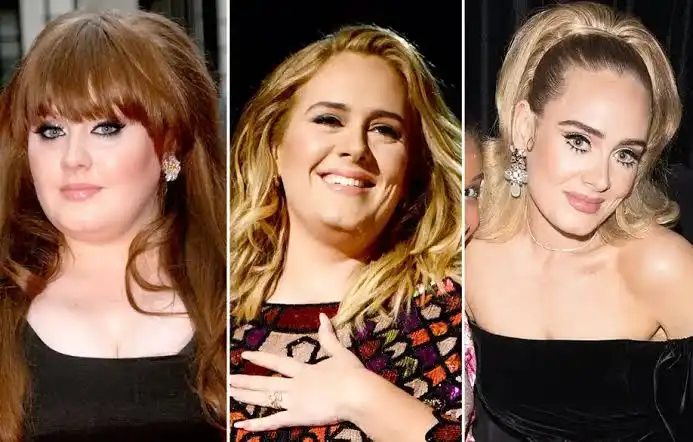
Did Adele Use Ozempic? Fact-Checking Her Weight Loss Rumors
The Adele Ozempic question has circulated for years, particularly after the singer’s highly visible physical transformation. But there is an important distinction between a viral theory and verified evidence.
There is no reliable public confirmation that Adele used Ozempic, Wegovy, semaglutide, tirzepatide, Mounjaro, Zepbound, or another prescription weight-loss medication. Adele has publicly discussed her exercise, anxiety, and broader lifestyle during the period when she lost substantial weight, but she has not publicly attributed that transformation to a GLP-1 medication.
That does not prove that she did not use medication privately. It means the available public evidence does not establish that she did.
This distinction matters because photographs, body shape, apparent weight-loss speed, clothing size, facial changes, or social-media commentary cannot identify whether someone has taken a prescription medication.
Adele herself also warned in her 2021 British Vogue interview that many stories surrounding her transformation were inaccurate, specifically criticizing people who claimed to have trained her when she said they had not.
So, if you’re searching “Did Adele use Ozempic?”, the most evidence-based answer is:
It has been widely speculated, but Adele’s use of Ozempic or another GLP-1 medication has not been publicly confirmed.
Adele Ozempic Rumors at a Glance
| Question | What the evidence shows |
|---|---|
| Did Adele confirm using Ozempic? | No public confirmation found. |
| Did Adele confirm using Wegovy? | No public confirmation found. |
| Did Adele confirm using semaglutide? | No public confirmation found. |
| Did Adele confirm using another GLP-1 medication? | No reliable public confirmation found. |
| Has Adele discussed her weight loss? | Yes. She has discussed exercise, anxiety and becoming physically stronger. |
| Can her photographs prove medication use? | No. Appearance cannot establish prescription-drug use. |
| Did she have a documented exercise routine? | Yes. Adele described weights, hiking or boxing, and cardio during her intensive training period. |
| Is every online Adele weight-loss claim reliable? | No. Adele herself said many stories about her were false. |
The strongest conclusion is therefore unconfirmed, rather than either “definitely yes” or “definitely no.”
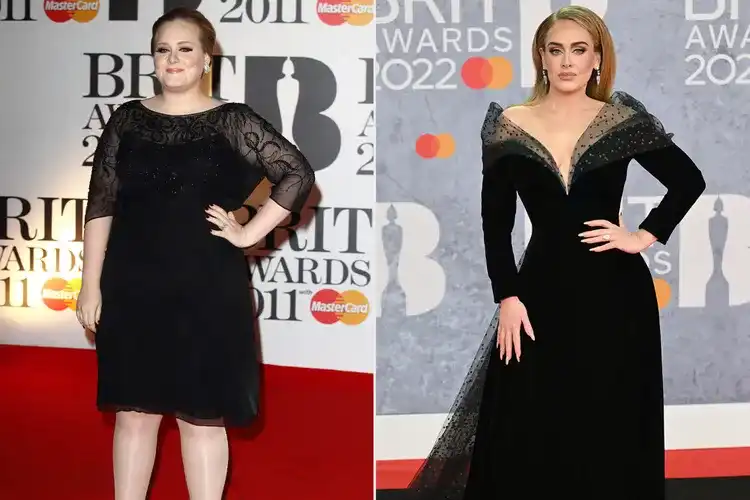
Credit : Mike Marsland/WireImage ; Karwai Tang/WireImage
Did Adele Use Ozempic?
Based on the reliable public record, Adele has not publicly confirmed using Ozempic.
Her most detailed public discussion of her transformation came in her 2021 British Vogue interview. She described exercise as a way of managing anxiety and becoming physically stronger. She said she was exercising frequently and working with trainers, while also pushing back against inaccurate stories about her weight-loss methods.
Importantly, the interview predates the period when Ozempic became one of the dominant celebrity-weight-loss talking points. Adele did not identify Ozempic or another prescription weight-loss drug as the explanation for her transformation in that interview.
There is also an important complication: absence of disclosure is not evidence of absence. A person’s medical records are private, and a celebrity has no obligation to publish every medication they may or may not have taken.
Therefore, the responsible wording is:
Adele’s Ozempic use has not been publicly confirmed.
It would be equally irresponsible to rewrite that as:
Adele definitely did not use Ozempic.
Those are different claims.
What the public record supports
- Adele publicly discussed intensive exercise and its connection to her mental well-being.
- She discussed weights, hiking, boxing and cardio during that period.
- Her former trainer Pete Geracimo publicly described their work as being focused on getting her healthier rather than simply making her thinner.
- Adele has not publicly identified Ozempic, Wegovy or another GLP-1 drug as the cause of her transformation.
What the public record does not support
There is no reliable evidence allowing us to state that Adele:
- injected Ozempic;
- took Wegovy;
- used semaglutide;
- used tirzepatide;
- used Mounjaro or Zepbound;
- received a GLP-1 prescription;
- lost a specific amount of weight because of a GLP-1 drug.
Those claims require evidence that is not established by photographs or repeated internet commentary.
What Has Adele Actually Said About Ozempic?
This is where careful fact-checking becomes particularly important.
Adele’s public comments about her transformation have focused primarily on exercise, anxiety, strength and personal circumstances, rather than prescription weight-loss medication. In her 2021 British Vogue interview, she explained that exercise helped her manage anxiety and that becoming physically stronger was more important to her than losing weight. She also described working out with trainers.
She also challenged the accuracy of much of the media coverage surrounding her transformation. British Vogue’s archive of the interview records Adele criticizing fabricated accounts, including claims from people who said they had trained her.
That matters when evaluating later Adele Ozempic rumors. If an article claims that Adele used a particular medication, the first question should be:
Where did that information actually originate?
A headline that says “Adele reportedly used Ozempic” is not equivalent to Adele saying she used Ozempic.
Likewise, a website citing another website that cites another website is not three independent sources.
Has Adele directly denied Ozempic use?
The public record is more nuanced than some viral posts suggest.
I found no sufficiently authoritative primary statement from Adele explicitly saying, “I did not use Ozempic.” Some secondary sources characterize her as having denied or rejected various weight-loss rumors, while other sources describe her as simply not addressing the specific medication.
For that reason, this article does not turn a lack of confirmation into a categorical denial.
The safest statement is:
Adele has not publicly confirmed using Ozempic or another GLP-1 medication, and the available evidence does not establish that she did.
Why Do People Think Adele Used Ozempic?
The Adele weight loss Ozempic theory is understandable as a cultural phenomenon, but that does not make it medically or journalistically reliable.
Several factors helped create the speculation.
1. Adele’s transformation was highly visible
Adele is one of the world’s most photographed performers. Changes in her appearance were therefore noticed by millions of people.
That creates an unusual situation: the public can compare photographs from different periods even though it cannot see the person’s private medical or lifestyle information.
2. GLP-1 drugs became a major celebrity story
Ozempic and related medications became a huge part of popular culture as more people learned about their effects on appetite and weight management.
As celebrities began openly discussing medications such as Ozempic, Wegovy, Mounjaro and Zepbound, other celebrities who had already lost weight became part of the same conversation.
3. People began applying the same explanation to multiple celebrities
Once “celebrity + weight loss + Ozempic” became a familiar media formula, appearance itself could become the starting point for speculation.
That is backwards from a proper evidence standard.
A confirmed medication story should generally proceed from evidence to conclusion, not from appearance to medication theory.
4. Social media accelerates repetition
A speculative post can become a headline.
That headline can become another social-media post.
Another website can then cite the headline as though it were a separate source.
Eventually, readers may see dozens of pages making the same claim and assume that dozens of sources independently confirmed it.
They may not have.
5. Adele’s earlier transformation became part of the Ozempic era
Adele’s major publicly discussed weight loss occurred before the current GLP-1 conversation became as dominant as it is today.
But once Ozempic entered mainstream celebrity culture, older transformations were retrospectively reinterpreted through the new narrative.
That does not establish what happened in Adele’s private life.
Can Adele’s Weight Loss Prove She Used Ozempic?
No.
This is one of the most important points in the entire Adele Ozempic discussion.
A photograph can show what someone looked like at a particular moment. It cannot show what prescription medications they were taking.
A photograph cannot establish:
- whether someone used Ozempic;
- whether someone used Wegovy;
- whether someone used another GLP-1 drug;
- how much they ate;
- how much they exercised;
- their medical history;
- their laboratory results;
- their exact weight;
- their body-fat percentage;
- whether weight change was intentional;
- the reason for the change.
Even an apparent rapid transformation cannot establish medication use.
Weight can change because of many interacting factors, including nutrition, physical activity, sleep, stress, genetics, environment, health conditions, medications and other circumstances.
What about “Ozempic face”?
Changes in facial appearance are sometimes used online as supposed evidence of GLP-1 use.
That is not a valid diagnostic test.
Facial appearance can change with age, overall weight change, hydration, photography, lighting, makeup, hairstyle, body composition and many other factors.
There is no responsible medical basis for looking at a photograph of Adele and declaring that she used a particular prescription medication.
What Is Ozempic and How Does It Work?
Ozempic is the brand name for semaglutide, a prescription medication that belongs to the GLP-1 receptor agonist class.
Under its current U.S. FDA labeling, Ozempic is indicated as an adjunct to diet and exercise to improve blood-glucose control in adults with type 2 diabetes, and for certain cardiovascular and kidney-risk reductions in adults with type 2 diabetes.
Semaglutide acts on GLP-1 receptors. GLP-1 is a hormone involved in regulating blood glucose and appetite. Medications in this class can influence appetite and food intake, while semaglutide also affects glucose regulation.
This is one reason semaglutide became prominent in discussions about weight management.
Does semaglutide actually cause weight loss?
Clinical research has demonstrated that semaglutide can produce substantial weight reduction in appropriate populations.
For example, the STEP 1 randomized clinical trial found that adults with overweight or obesity who received semaglutide 2.4 mg alongside lifestyle intervention had substantially greater average weight loss than those receiving placebo after 68 weeks. Gastrointestinal effects such as nausea and diarrhea were among the commonly reported adverse events.
But that research establishes what happened in a clinical trial population.
It does not establish that Adele used semaglutide.
Those are two completely different evidence questions.
What are common side effects?
The FDA prescribing information for Ozempic lists nausea, vomiting, diarrhea, abdominal pain and constipation among the most common adverse reactions. The label also contains important warnings and contraindications, including a boxed warning concerning thyroid C-cell tumors observed in rodents and a contraindication for people with a personal or family history of medullary thyroid carcinoma or MEN2. That is why these medications should be treated as prescription medical treatments, not as casual celebrity beauty products.
Ozempic vs. Wegovy vs. Other GLP-1 Medications
One source of confusion in celebrity coverage is that several different medications are frequently lumped together as “Ozempic.”
They are not identical products.
| Medication | Active ingredient | Broad U.S. regulatory role |
|---|---|---|
| Ozempic | Semaglutide | Primarily indicated for adults with type 2 diabetes, with certain cardiovascular and kidney indications. |
| Wegovy | Semaglutide | Approved for chronic weight management in specified adults and adolescents, with additional cardiovascular indications. |
| Mounjaro | Tirzepatide | FDA-approved for improving blood-glucose control in adults with type 2 diabetes. |
| Zepbound | Tirzepatide | Approved for chronic weight management in specified adults with obesity or overweight plus a weight-related condition. |
Semaglutide is not synonymous with Ozempic
Semaglutide is the active drug ingredient.
Ozempic and Wegovy are different branded products containing semaglutide, with different approved indications and labeling.
The fact that someone is rumored to have used “semaglutide” therefore does not automatically mean they used Ozempic.
Tirzepatide is different again
Mounjaro and Zepbound contain tirzepatide, not semaglutide.
Tirzepatide acts on both GIP and GLP-1 pathways, which is pharmacologically different from semaglutide’s GLP-1 receptor agonism.
So a claim that “Adele used a GLP-1” is not equivalent to a confirmed claim that she used Ozempic.
And in Adele’s case, none of these medications has been publicly confirmed as part of her weight-loss story.
Adele Weight Loss Medication: What Can Actually Be Confirmed?
The following distinction is useful when evaluating the many versions of the Adele weight-loss medication story.
| Claim | Evidence Status | What We Can Responsibly Say |
|---|---|---|
| Adele used Ozempic | Unconfirmed | No reliable public confirmation establishes this. |
| Adele used semaglutide | Unconfirmed | There is no reliable public evidence establishing semaglutide use. |
| Adele used Wegovy | Unconfirmed | No credible public confirmation establishes Wegovy use. |
| Adele used another GLP-1 medication | Unconfirmed | No reliable public confirmation establishes use of another GLP-1 drug. |
| Adele’s weight loss proves medication use | Unsupported | Appearance and weight change cannot identify a prescription medication. |
| Adele publicly discussed exercise as part of her transformation | Confirmed | She described intensive exercise, including weights, hiking or boxing, and cardio. |
| Adele said many stories about her transformation were inaccurate | Confirmed | She directly challenged inaccurate claims in her British Vogue interview. |
| Adele’s transformation had multiple possible contributing factors | Reasonable but not quantifiable | Public reporting discusses exercise and lifestyle, but the contribution of each factor cannot be calculated from the available record. |
The key word throughout this table is evidence.
A claim does not become confirmed merely because it appears on ten websites.
Adele Before and After: Why Photos Aren’t Medical Evidence
Searches for “Adele before and after” often produce side-by-side photographs showing a striking change in appearance.
Those photographs can document that Adele looked different at different points in her career.
They cannot explain why.
A before-and-after image cannot establish:
- medication use;
- a specific diet;
- a specific exercise program;
- surgery;
- exact weight;
- exact rate of weight loss;
- medical conditions;
- laboratory measurements;
- prescription history.
It is also important not to confuse appearance with health.
A smaller body is not automatically a healthier body, just as a larger body does not automatically establish poor health. Medical health is considerably more complicated than a photograph.
For that reason, a responsible article should describe before-and-after photographs as visual documentation of appearance, not medical evidence.
How Did Adele Lose Weight?
The broader question of how Adele lost weight cannot be reduced to a single proven intervention.
Adele has publicly described a period of intensive exercise and explained that working out helped her manage anxiety and feel physically stronger. She also acknowledged working with trainers.
Her former trainer Pete Geracimo separately discussed working with Adele and described the goal as improving her health rather than simply making her “super skinny.”
Beyond that, the public record becomes less precise.
Adele herself rejected some widely circulated diet stories, including the claim that she had followed the Sirtfood Diet, in her 2021 British Vogue interview.
The exact contribution of exercise, nutrition, lifestyle changes and other private factors cannot be reconstructed from public information.
For the broader chronology and transformation story, see Adele’s broader weight-loss transformation.
The important point for this fact-check is that publicly documented exercise does not prove the absence of medication, just as medication speculation does not erase the exercise she openly discussed.
How Celebrity Ozempic Rumors Spread
Celebrity medication rumors often follow a predictable information cycle:
- A celebrity’s appearance changes.
- Someone speculates about a medication.
- A website reports the speculation.
- Another website cites that article.
- Social media repeats the new headline.
- Search engines accumulate multiple versions of the claim.
- Readers encounter repetition instead of original evidence.
- The original uncertainty disappears.
This creates a particularly dangerous problem with medical stories.
Imagine five websites all saying:
“Reports suggest Adele used Ozempic.”
If all five obtained the information from the same original social-media post, there are not five independent confirmations.
There is still one unverified claim.
Why celebrity stories are especially vulnerable
Celebrity health reporting frequently involves:
- incomplete information;
- anonymous sources;
- recycled interviews;
- old photographs;
- speculative headlines;
- unattributed “insider” claims;
- social-media commentary;
- confusion between different medications;
- assumptions based on appearance.
A responsible fact-check should therefore trace the claim backward until it reaches its original evidence.
If the original evidence is simply “people online noticed Adele lost weight,” the claim has not been medically established.
How to Fact-Check Celebrity Ozempic Claims
A useful framework for evaluating an Adele Ozempic rumor is to ask six questions.
1. Did the celebrity say it themselves?
A direct interview, verified statement or official communication is substantially stronger than anonymous speculation.
2. Is there a named source?
“An insider claims” is weaker than a named, attributable source with a clear relationship to the celebrity.
3. Is the source reputable?
A medical claim should not automatically be accepted because it appears on a celebrity website.
Look for established journalism, primary sources, regulatory information and medical literature.
4. Is there independent corroboration?
Two publications repeating the same anonymous claim do not necessarily provide independent confirmation.
Look for genuinely separate evidence.
5. Does the article distinguish reporting from speculation?
Phrases such as “fans think,” “social media users believe” and “experts speculate” should not be rewritten as “Adele used Ozempic.”
6. Is the evidence based only on appearance?
If the entire argument is based on photographs, body shape or the speed of weight loss, it is not enough to establish prescription medication use.
The strongest celebrity health reporting starts with evidence, not appearance.
Adele’s Reported Workout and Diet: What We Know
The Ozempic question exists within a larger public conversation about Adele’s transformation.
Her exercise history is relatively well documented compared with claims about medication. In British Vogue, Adele described weights, hiking or boxing, cardio and training with professionals. She also explained that exercise was closely tied to managing anxiety and becoming stronger.
Her former trainer also publicly discussed their work and rejected the idea that the goal was simply to make her thinner.
For the fitness-specific evidence, see Adele’s reported fitness routine.
Diet claims are considerably more complicated. Adele explicitly pushed back against the widely circulated Sirtfood story in her British Vogue interview.
For that separate topic, see Adele’s reported diet and Sirtfood connection.
Neither exercise nor diet evidence can, by itself, establish whether Adele used a prescription medication privately.
What Readers Should Take Away From the Adele Ozempic Story
There are several lessons beyond the question of one celebrity.
Celebrity appearance is not a diagnostic tool
You cannot diagnose medication use from a photograph.
Weight management is multifactorial
Weight change can involve nutrition, physical activity, sleep, stress, genetics, environment, medications and health conditions.
Prescription weight-management medications are legitimate medical treatments
GLP-1-based medications can be appropriate treatments for certain patients when prescribed and monitored by qualified healthcare professionals. They are not inherently “good” or “bad,” and they should not be morally judged as a shortcut or failure.
They are also not appropriate for everyone
The NIDDK notes that prescription weight-management medications are intended for people who meet relevant clinical criteria and that medication choices depend on factors such as health conditions, other medications, family history, risks, benefits and individual circumstances.
A celebrity’s experience is not a prescription
Even if Adele had publicly confirmed using a particular medication, that would not tell another person whether the medication was appropriate for them.
Celebrity routines and medical decisions should never be copied blindly.
FAQs
Did Adele use Ozempic?
There is no reliable public confirmation that Adele used Ozempic. She has publicly discussed exercise and other aspects of her transformation, but the available evidence does not establish Ozempic use.
Did Adele take Wegovy?
There is no reliable public confirmation that Adele used Wegovy.
Did Adele use semaglutide?
No reliable public source establishes that Adele used semaglutide. Semaglutide is the active ingredient in both Ozempic and Wegovy, but neither has been publicly confirmed as part of Adele’s transformation.
What has Adele said about Ozempic?
Adele has discussed her weight loss and exercise publicly, but there is no reliable primary-source statement establishing that she used Ozempic. She has also criticized inaccurate reporting about her transformation.
Why do people think Adele used Ozempic?
The speculation largely stems from her visible transformation and the broader rise of GLP-1 medications in celebrity culture. Neither factor proves medication use.
Can Adele’s weight loss prove she used Ozempic?
No. Photographs, apparent weight-loss speed, facial changes and body shape cannot establish prescription medication use.
What is Ozempic?
Ozempic is a prescription medication containing semaglutide, a GLP-1 receptor agonist. Its FDA-approved indications include improving blood-glucose control in adults with type 2 diabetes and reducing certain cardiovascular and kidney risks in specified patients.
What is the difference between Ozempic and Wegovy?
Both contain semaglutide, but they are different branded products with different FDA-approved indications and labeling. Wegovy is specifically approved for chronic weight management in specified patients.
Did Adele’s workout cause her weight loss?
Exercise was clearly part of Adele’s publicly described routine, but the available evidence cannot quantify how much of her weight change was attributable to exercise alone.
What is actually known about Adele’s weight-loss method?
Adele has publicly discussed intensive exercise and its connection to anxiety management and physical strength. She has not publicly confirmed using Ozempic or another GLP-1 medication. Many more precise claims circulating online remain unverified.
Final Takeaway
The Adele Ozempic story illustrates the difference between a viral theory and verified evidence.
Adele’s transformation generated extensive speculation about Ozempic, semaglutide and other GLP-1 medications, particularly as those drugs became increasingly prominent in celebrity culture. But there is no reliable public confirmation establishing that Adele used Ozempic, Wegovy, semaglutide, tirzepatide, Mounjaro, Zepbound or another prescription weight-loss medication.
What is documented is that Adele publicly discussed intensive exercise, working with trainers and using physical activity as a way to manage anxiety and become stronger. She also warned that many stories surrounding her transformation were inaccurate.
The responsible conclusion is therefore neither “Adele definitely used Ozempic” nor “Adele definitely did not.”
It is:
Adele’s Ozempic use remains unconfirmed, and her appearance cannot provide that confirmation.
When evaluating celebrity weight-loss claims, the best standard is simple: follow the evidence back to its original source, distinguish direct statements from speculation, and never turn repetition into proof.